Granny Flats vs. Duplexes: Which Is the Better Investment
Last Updated: August 2, 2026
Backyard Pods vs. Dual Occupancy: Which Is the Better Investment in 2025?
A custom-built backyard pod delivers a 10-15% rental yield on construction cost and can be crane-lifted into your Melbourne backyard in 8-12 weeks for $120,000-$180,000. A dual-occupancy development often yields 4-6% on total project cost, takes 12-18 months, and requires $500,000-$900,000. For most Melbourne property owners, the backyard pod wins on speed, cashflow, and simplicity.
What Is a Backyard Pod vs a Dual Occupancy?
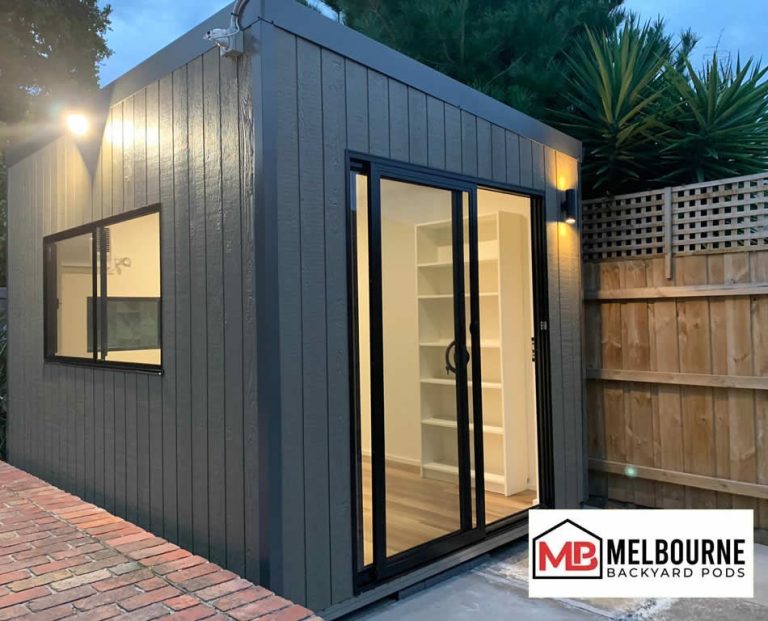
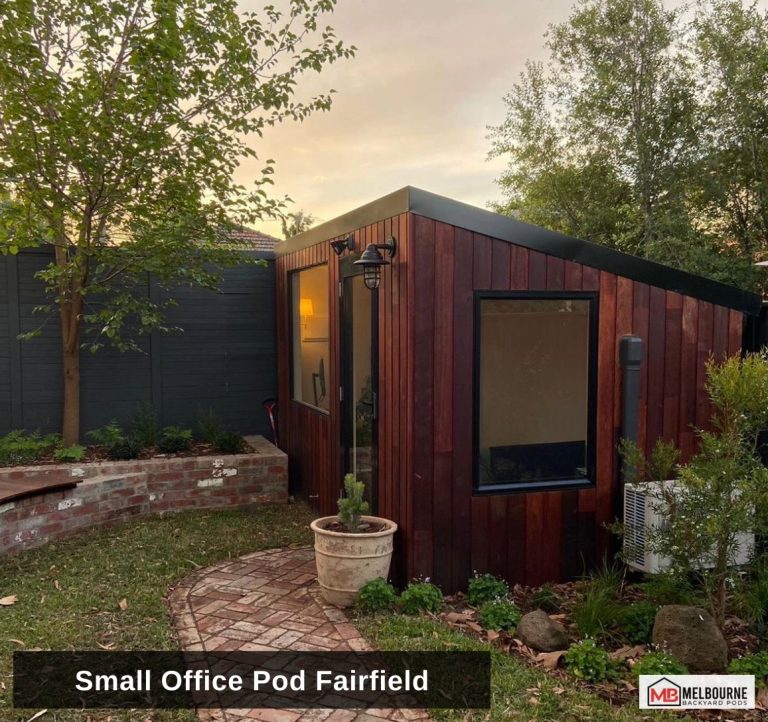
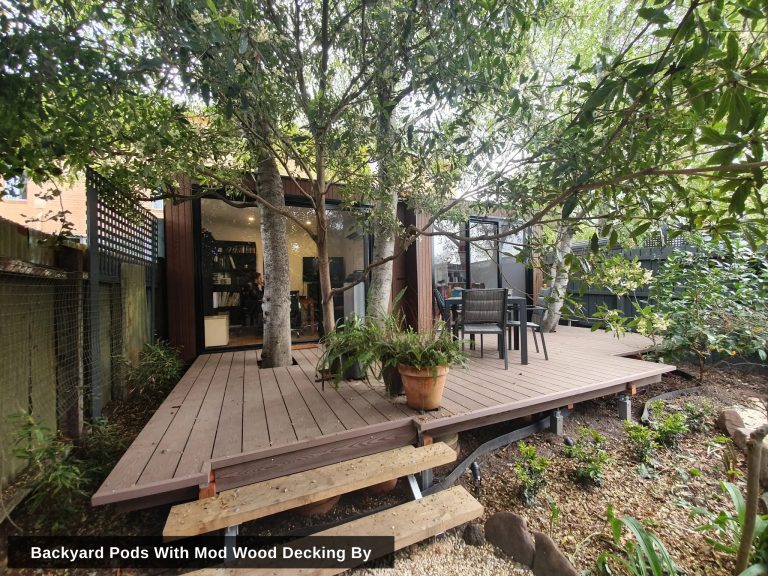
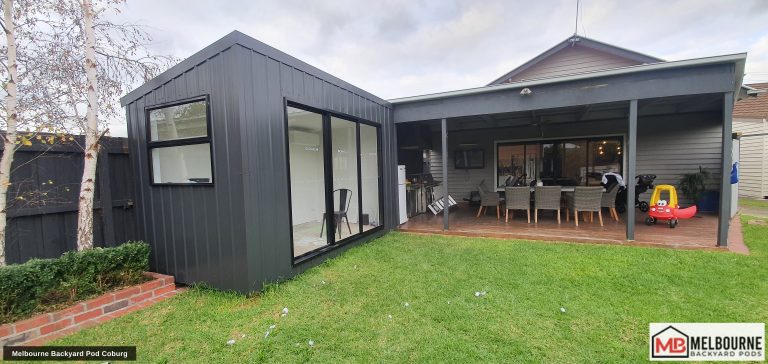
A backyard pod is a self-contained steel frame structure built in a factory and delivered complete to your property. It sits on the same title as your existing home, typically 10 to 40 square metres, and is designed as a garden studio, home office pod, or creative workspace. It cannot be sold separately from the main property.
A dual-occupancy development involves two attached or semi-detached dwellings on a single block, each on its own title. This means you can sell one or both independently. The investment mechanics are fundamentally different. With a backyard pod, you’re adding functional, income-producing space to land you already own. With a dual occupancy, you’re undertaking a full development project, often demolishing the existing house and building two new dwellings.
One is a backyard addition. The other is a full-scale property development. Both are legitimate strategies, but they suit different financial positions, timelines, and risk appetites.
Why the Backyard Pod vs Dual Occupancy Decision Matters for Melbourne Property Owners
Melbourne’s median house price sits around $1,028,000 as of early 2025. The deposit, stamp duty, and holding costs on a second investment property are substantial. Meanwhile, you might be sitting on 600-800 square metres of underutilised land. The question isn’t whether to invest, it’s which strategy extracts the most value from the asset you already control.
A backyard pod lets you generate rental income or create a dedicated workspace without buying another property. You’re using existing land, existing services, and existing equity. Because you’re not subdividing, the planning pathway is generally simpler, often a VicSmart permit depending on your council. The pod is custom built off-site, then delivered by crane and placed in position in a single day. There’s no months-long construction site in your backyard.
A dual-occupancy development forces you to think like a developer. You’ll need a town planning permit, subdivision approval, and construction finance. The upfront capital requirement is higher, and you’ll carry more debt during the build. The decision matters because choosing the wrong strategy for your financial position can lock up capital for years or deliver underwhelming returns.
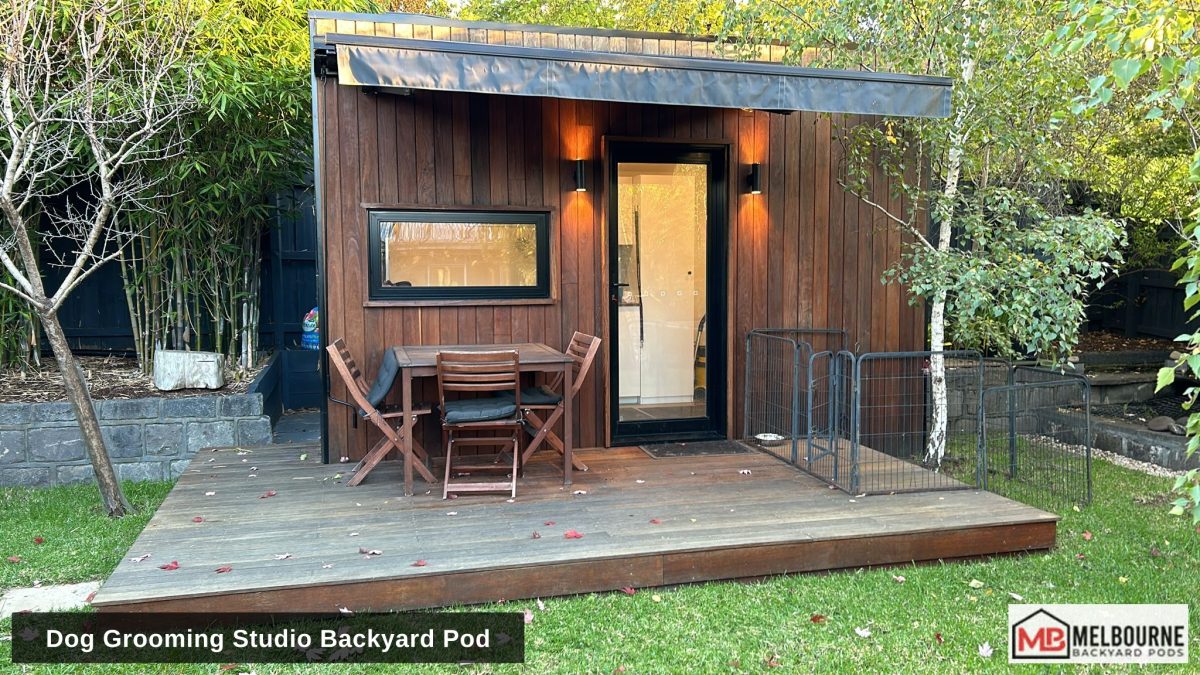
How a Backyard Pod Investment Compares to a Dual-Occupancy Development
Both strategies follow a process, but the complexity diverges sharply after the feasibility stage. Here’s how they compare step by step.
Backyard Pod Investment Process
The process starts with a site assessment. You need adequate space, access for crane delivery, and service connections. A backyard pod is a secondary structure to the principal dwelling, meaning the main house retains prominence on the block.
Design and approvals take 4-8 weeks. Many Melbourne backyard pods fall under VicSmart assessment if they’re under 60 square metres and meet siting requirements. This is a 10-business-day assessment pathway with no public notification required. Larger or non-compliant designs go through the standard planning permit process, which adds 3-6 months.
Construction happens off-site in a controlled factory environment. Your custom built pod is manufactured to your specifications using a durable steel frame, then transported to your Melbourne property and crane lifted into position. The entire on-site installation takes a single day. From decision to completion, the timeline is typically 8-12 weeks.
Once complete, you can use it as a home office pod, a garden studio for creative work, or rent it out. Rental income for a well-designed backyard pod in Melbourne’s middle-ring suburbs ranges from $350-$480 per week. There’s no separate land tax, no separate rates notice, it’s all part of the primary property.
Dual-Occupancy Development Process
You start with a feasibility study: can the block be subdivided? Minimum lot sizes, frontage requirements, and neighbourhood character overlays vary by council. In Monash, for example, you typically need 700-800 square metres with 15-metre frontage. In Boroondara, requirements are stricter. Many blocks that appear suitable on paper fail at the planning stage.
Town planning approval takes 6-12 months. This involves architectural drawings, a planning report, and public notification. Neighbours can object. Council can impose conditions. The process is adversarial by nature, you’re changing the character of a street, and not everyone welcomes that.
Once approved, you need construction finance, typically a development loan drawn down in stages. Build costs for two attached three-bedroom dwellings range from $500,000 to $900,000 depending on finishes, site conditions, and builder margins. Construction takes 12-18 months. You’re carrying interest, holding costs, and risk throughout.
After completion, you can sell one or both, rent both, or live in one and sell the other. Each dwelling gets its own title, its own rates notice, and its own capital gains tax treatment on sale.
Backyard Pod vs Dual Occupancy Costs in Melbourne (2025)
Here are the numbers for Melbourne market conditions as of early 2025, based on actual project data and builder quotes.
Backyard Pod Costs:
- Design and approvals: $5,000-$12,000
- Site preparation and services connection: $8,000-$15,000
- Custom built pod, crane lifted to site (turnkey, 25sqm): $120,000-$180,000
- Total project cost: $133,000-$207,000
- Rental income (weekly): $350-$480
- Gross yield on construction cost: 10-15%
Dual-Occupancy Development Costs:
- Planning and subdivision: $30,000-$60,000
- Demolition (if required): $20,000-$35,000
- Construction (two dwellings, 150-180sqm each): $500,000-$900,000
- Total project cost (including land value if already owned): $550,000-$1,000,000+
- Rental income (weekly, both dwellings): $1,000-$1,600
- Gross yield on total project cost: 4-6%
The backyard pod delivers superior yield on capital employed. It also preserves your existing home and garden, requires no demolition, and generates income within a single season. A dual-occupancy development creates two titled assets you can sell, but at significantly higher cost, risk, and time commitment.
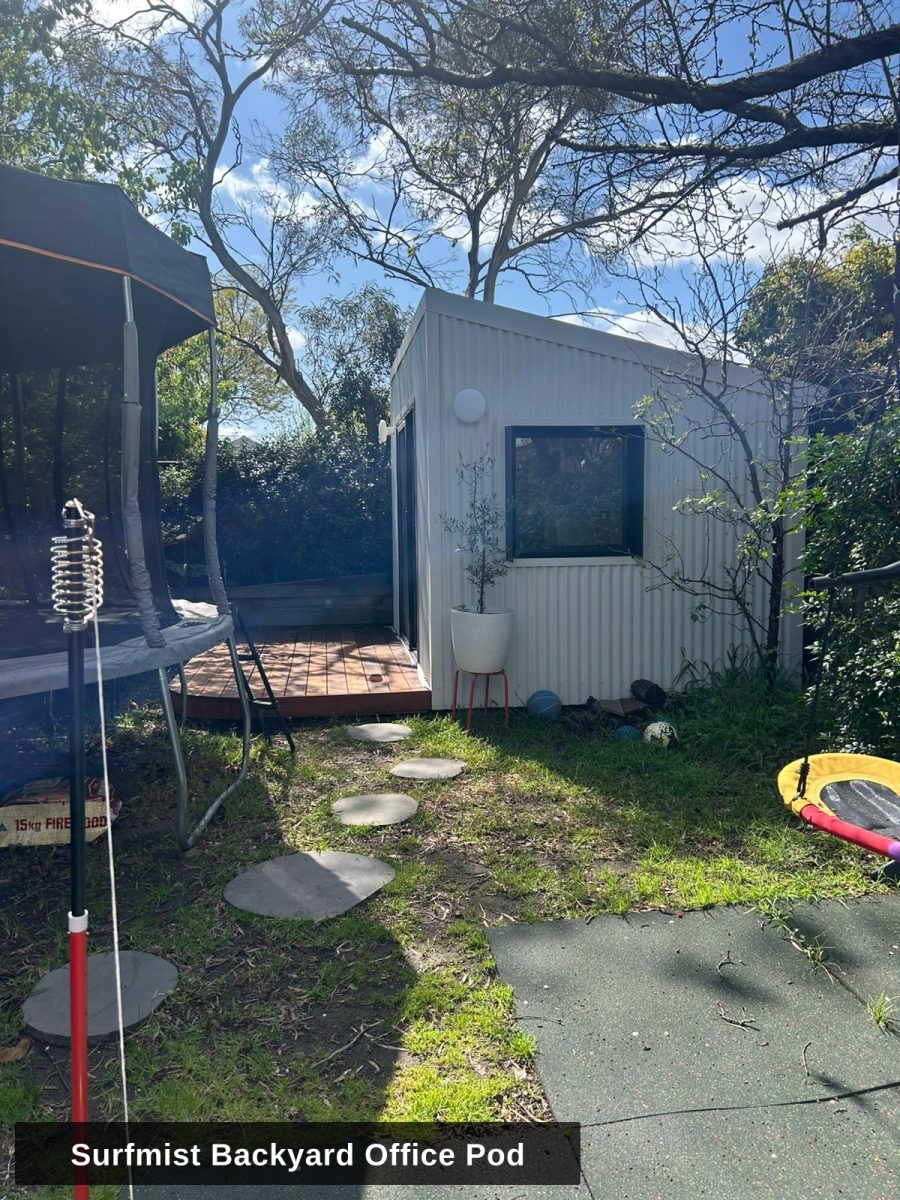
Choosing the Right Strategy for Your Property Goals
Your choice between a backyard pod and a dual-occupancy development comes down to four factors: capital, timeline, risk tolerance, and how you want to use the space.
Choose a Backyard Pod If You Want Flexibility Without the Complexity
You’re the right candidate for a backyard pod if you have $130,000-$200,000 in accessible equity or cash, want to start using the space within 3 months, and prefer to keep your existing house and garden intact. This strategy suits Melbourne homeowners who need a dedicated home office pod, a garden studio for creative work, or rental income to offset their mortgage.
Backyard pods work particularly well on blocks over 400 square metres in councils like Whitehorse, Maroondah, Kingston, and Greater Dandenong, where planning policy is generally supportive. They’re also an excellent entry point for property owners who want to add functional space without committing to a full development.
A steel frame backyard pod from Melbourne Backyard Pods is custom built to your specifications, from the cladding colour to the window placement and interior fit-out. Because it’s manufactured off-site and crane lifted into place, there’s no months-long construction disruption. You get a fully finished, insulated, and connected space ready to use the day it arrives.
Choose a Dual Occupancy If You’re Focused on Long-Term Land Value
Dual-occupancy development suits investors with deeper pockets and longer time horizons. You need $200,000-$400,000 in accessible capital for deposits, planning costs, and early-stage construction draws. You need patience, the process from purchase to completion can stretch 2-3 years. And you need the stomach for planning risk: councils can reject applications, neighbours can appeal to VCAT, and construction costs can blow out.
The outcome is capital growth at scale. A block purchased for $900,000 that yields two dwellings worth $750,000 each has created $600,000 in new value, minus costs. That’s wealth creation that a backyard pod cannot match. But it comes with development risk, GST implications, and potential capital gains tax on sale.
Common Mistakes to Avoid When Comparing Backyard Pods and Dual Occupancy
Mistake 1: Ignoring council overlays until it’s too late. Many property owners assume they can build a second dwelling, only to discover a Heritage Overlay, Significant Landscape Overlay, or Neighbourhood Character Overlay that restricts development. Before you commit to either strategy, pull the planning property report from your council website. Check the zoning, overlays, and minimum lot size requirements. Do this before you spend a dollar on design.
Mistake 2: Comparing gross yield without factoring in holding costs. A backyard pod’s 12% gross yield looks strong on paper, but you need to subtract vacancy periods, maintenance, insurance, and property management fees. A dual occupancy’s 5% yield looks modest, but if you’re holding for capital growth, yield is secondary. Run both strategies through a net cashflow model that includes all costs over a 10-year horizon: interest, rates, water, insurance, repairs, management, and tax.
Mistake 3: Underestimating construction finance complexity. Backyard pod construction is typically funded through a home equity loan or construction loan drawdown. Dual-occupancy development requires a commercial-style development loan with progress payments, quantity surveyor inspections, and higher interest rates. If your borrowing capacity is tight, the dual-occupancy path may not be available to you regardless of the theoretical returns.
Mistake 4: Overlooking the value of a dedicated workspace. A backyard pod that serves as your home office pod or garden studio delivers a different kind of return: no commute, a professional space separate from the house, and the ability to focus without household distractions. For Melbourne professionals working remotely, a custom built backyard pod can pay for itself in productivity and wellbeing, not just rental income.

Frequently Asked Questions
Can I build a backyard pod and later convert it to a dual occupancy?
No, not in the way you might imagine. A backyard pod is a secondary structure on a single title. Converting to a dual occupancy requires subdivision, which means the block must meet minimum lot size and frontage requirements for two separate titles. If your block qualifies for subdivision, you could theoretically build a second dwelling later, but you’d need a new planning permit, and the existing pod may constrain the design envelope. It’s generally better to decide upfront which path you’re taking.
Which strategy has better tax depreciation benefits?
Both offer depreciation, but the mechanisms differ. A backyard pod is depreciated as a capital works deduction (Division 43) at 2.5% per year over 40 years, plus plant and equipment (Division 40) for fixtures and fittings. A dual-occupancy dwelling held as an investment property gets the same treatment per dwelling. A backyard pod cannot be sold separately, so capital gains tax is calculated on the entire property when sold.
How long does each option take from decision to use?
A backyard pod: 4-8 weeks for design and approvals, then 4-6 weeks for factory construction. Your custom built pod arrives on a truck and is crane lifted into position in a single day. You can be using the space within 8-12 weeks of making the decision. A dual occupancy: 6-12 months for planning approval, 2-4 months for building permit and tender, 12-18 months for construction. Expect 18-30 months before you see any income or sale proceeds.
Do I need council approval for a backyard pod in Melbourne?
Yes, but the pathway is often simpler than for a dual occupancy. Many backyard pods under 60 square metres qualify for VicSmart assessment, a streamlined 10-business-day process with no public notification. Requirements vary by council, but generally you need the pod to be behind the front building line, meet setback requirements, and not exceed site coverage limits. Dual occupancies always require a full planning permit with public notification, and subdivision requires a separate approval under the Subdivision Act.
Which option adds more value to my Melbourne property?
A dual occupancy adds more total value because it creates two separately titled assets. The combined value of two dwellings on separate titles typically exceeds the value of a single dwelling plus a backyard pod on one title. However, the backyard pod adds value at a lower cost base, meaning your return on invested capital can be higher in percentage terms. For many Melbourne homeowners, a garden studio or home office pod also adds lifestyle value that doesn’t show up on a spreadsheet: a dedicated workspace, creative studio, or guest accommodation right in the backyard.
A Smarter Alternative for Melbourne Property Owners
The backyard pod vs dual-occupancy decision ultimately hinges on your capital position, timeline, and how you want to use the space. If you want a functional, income-producing addition within 12 weeks with manageable complexity, a backyard pod is the clear choice. If you’re sitting on a large block in a growth corridor and can carry debt for 2-3 years, a dual-occupancy development may be the wealth-building move.
Melbourne Backyard Pods specialises in custom built backyard pods designed and delivered across Melbourne. Our steel frame pods are manufactured off-site, crane lifted into your backyard, and ready to use the day they arrive. Whether you need a home office pod, a garden studio, or a rental-ready space, we handle site assessment, permits, and delivery so you can move from decision to completion in 8-12 weeks.
Contact Melbourne Backyard Pods on 1300 866 131 or email info@melbournebackyardpods.com.au for a no-obligation discussion about your specific block and how we can deliver a custom-built backyard pod to your site.